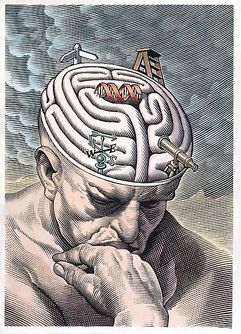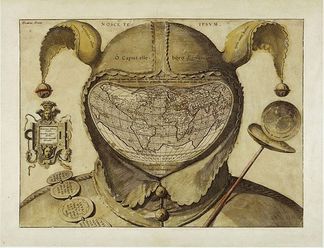
At one time, when my son was a small boy I would ask him: Where do you live? He answered with good sense: “Street so and so, second floor.” I would smile and correct him didactically: “No Daniel, you live in the Endless, immense Universe, in the Virgo Supercluster, the Milky Way Galaxy of numberless stars and planets, the Solar System, on our good old Planet Earth, continent Europe, Switzerland, Geneva, by the lake Leman on the Rhone river, in Onex, rue Gros-Chêne, 14A, second floor. You live in the World.” He understood what I meant, quickly, like a smart kid; and he lives his adult life accordingly (or almost). * It helps to know where you live to think out of the box or when little people bother you down here in the pit. * There are countries, recently “freed” where people do not realise how they are purposefully, methodically dwarfed in their soul by the mere microscopic placement of their home address or name. Good people consider normal to be recognized to exist and be enabled to sign with their name only after being identified as: identity complete, birth date and place, card number XXXXXXXXXXXXXXXXXX, series XXX, delivered by local authority XYZ now confirmed as living in Region XX, City XXXXXXXX, Sector XX, Bloc XXX, Door XX, Staircase Xb, floor XX, app. XX. In their address there is no reference, of course, of Europe, the World, Earth and so on; but they still get harangued – daily - of being responsible for the greenness of the planet, the regular famine in the third world, the barbarianism of religious oppression far away and the huge bright promise of Paradise which is living in One Global World, free, modern and civilised.
I am a reader, not one of those so called writers.
Mine is the unseen, unrewarded work, without which written words have no reason to be. I do not need to be fair. Faceless as I am, I am the final judge of books. I cut books to my size.
I determine - with my powers to understand and my view - what is in fact written there on the pages.
The intentions I discern are the ones that come to be real. The ugliness I see, maybe my own, becomes the author's. The beauty I see, is my gift to him, to her.
Lucky the pen strong enough to carry me with its flow, the one sharp enough to get past me!
When I am a bad reader I look with slant eyes to catch the mistake; weakness found makes me feel better. When I am indifferent, I lean back and say "amuse me, let me see what you are worth, clown!" When I am of the good ones, I knock, ask the books questions and try to wake up the sleeping wisdom in them, I adorn them generously with the beauty and the thoughts found in me;
then, books glow.
Where is the monument of the nameless reader?
The wisdom of Montaigne is of a sort that will come to be needed again*; that of the thinker who makes his life worth living in times of the beast. Let us face it, there is a time for everything; under tyranny, wisdom is opportunistic; or silent. Genius, to change the world, must stay alive. Servitude is distasteful and its compromises are ugly; you survive crawling like a worm. But there is still choice; as the witty epigram put it in my youth, "the race of worms is not just wriggling ilk; some make us sick but some, make silk" [1] Prudent Montaigne was of the silk-giving kind. In fact he was born in silk and lived in silk. As for his work, it was of the world changing class. Montaigne is heavy artillery disguised as fireworks. * Montaigne’s work, The Essays, sprouted – as a strange, untimely flower – from the middle of arbitrary rule and fanaticism, at the peak time of witch-hunting in Europe - the sixteenth century. You would not imagine living there. His feat was to plant a seed of independent thinking in the belly of the beast, without becoming a martyr. Born an insider to the system, he enjoyed privilege and approval, made a career, while being as I see him, a most effective dissident. Internal exile seems to be the way of life of genius in bad times; lack of wisdom would be to die for proud impatience of speech. In a "disturbed sick state" of religious persecution, censorship, savage civil war and plague, in an epoch where (as it often happens in history) might was right, under the inquisitive eye of absolute Monarchy and Church, Montaigne is inner freedom, critical spirit, the I, smiling, in gentlemanly attire; a quiet one-man revolution in human dignity and civilisation. He accomplishes to live unbent in a crooked world. Montaigne had to learn how to navigate an ocean of insecurity, a reign of cynicism, chaos, stupidity and malice; he did. His, was what I like to call a strategy of the cork - living now, and consciously evolving relative to ebb and flow of stormy tide, with one clear, floating landmark - keep at the surface, do not founder into wickedness. His way of being free - and of freeing other people - was to craft choices to navigate the complexity of unfreedom. * In his daily life, he was a reliable conservative gentleman, careful to heed Christ and give Caesar what is Caesars' and to God what is God's [2]. What was his, he kept for himself. In writing, the moralist played the tradition of the wise fool, gently; behind the Fool, hides the mountain. He worked to change the world from a position of weakness. * While practicing subversion of authority (knowingly or instinctively, what do I know?), Michel Eyquem, freshly accepted country gentleman descending from fish and wine merchants and Marrano patricians, parvenu to French nobility, achieves to be regarded and even better, to live like a grand seigneur of agreeable company and vital counsel to royals as different as Henry III, Catherine de Medici and Henry IV of Navarre. Mysteriously, the distracted, lazy, dreamy Sieur de Montaigne, always about to retire in the arrière boutique of his ivory tower, tormented by his kidney stones, uninterested in having any power in his hands, is found discretely central in the negotiations to convince Henry of Navarre that Paris is well worth a Mass [3]. Unimportant and anonymous as he pretended to be, he still gets imprisoned at the Bastille, from where Catherine de Medici, that proverbially nice, charitable lady, extracts him urgently: "Touche-pas à mon pote!" This outsider was just too useful, irreplaceable to waste. The apparent chatterbox was a prudent master of silence; not many people are able to speak so candidly and write so much without ever bragging or allowing secrets to escape their lips. Nothing transpires on his pages from the intrigues of the princes, the negotiations of the factions or the Bordeaux city real politics. Because he was discreet and kept away from the civil war mêlée, he was solicited, named and summoned in absence to be mayor of the troubled city of Bordeaux, rara avis able to mediate between Catholics and Protestants under the climate well symbolized by the Saint Bartholomew Night massacre. Public savagery preserves a touch of common sense asking help from is opposite. * Meanwhile, he wrote his book – the lasting achievement. He finds a flabbergasting stratagem to spread different ideas – reflexive writing. He writes to himself, about himself, as if. He does not write like others do about truth of the world, the Universe, nor about religion, just about himself, “domestic and private” ideally naked like a cannibal; it is not about reality he writes, no, no, simply about his intimate person, his body – thumb and prick included and his mind, about the strange, unimportant, private thoughts visiting his playful imagination. He, a humble sinner, is simply spending rich hours trying his hand and fantasy at attempting mere Essays. The Essays omit to show us how prudent and skillful he was in difficult circumstances with kings, queens and inquisitors. He only describes his skill with robbers. It was not a biography or a chronicle. For a change, he relates in detail how weak he was, the blunders he did, how he never knew what he forgot, how little he knew and how uncertainly. In fact, he was a skillful social man, a born diplomat; but he does not remind his successes or the events he influenced. He complains in detail about his pains and his clumsiness, his inattention. The man he depicts - so small and weak - shows that a great spirit is amazingly simple, a human being as we all can be. This is why so many people recognise themselves in his book. * Montaigne is a great author, indirectly. We cannot measure his influence so much by thankful quotes from later peers as by the reaction of great authors who opposed his ideas and who built on that opposition, often without quoting his name. Influence does not mean enslaving followers, rather making people think - their way - to what you propose. He is great by "t he share which his mind had in influencing other minds" [4]. Contemporaries liked his prose and maybe opened their minds without detecting all the implications. His tour de force in proliferating the ferment of critical spirit was executed with such a light touch, with velvet gloves, in such a pleasant, moderate, deferential, conservative, opportunistic, entertaining, exotic, metaphoric, unassuming manner, that King and Pope like it; it took almost a century for Inquisition to notice the chain-reaction of critical thought set alight in 1580 by his charming gossip and to forbid the Essays in 1676. Too late! The Montaigne attitude trickled into Shakespeare, his “I am my book” and "what do I know?" irritated Francis Bacon to retort “ Of myself I say nothing” [5] and to demonstrate with Method how certainly science can know the world. He fascinated Pascal and challenged Descartes to affirm the absolute power of Reason. He will inspire Diderot and water Rousseau. Kant knew by heart entire passages from him, and built on his skepticism. Nietzsche delighted in him and started playing with matches. His introspective book instituted quietly the reference Weltanschauung of being civilised, of the modern individual, of equality and tolerance. If you seek an example to personify Civilization when marching ahead, Montaigne is one. * Why do I believe that Montaigne was wise? Consider that wisdom was understood by the sages as the vehicle to living a happy life, with the meaning that such good life is one worth living. With Montaigne I find an instance to observe that the way towards such flourishing must fit the real world where we are born. We may know much wisdom, generate much wisdom but we are wise as much as we live wisely, in such a way that makes our life enviable and admirable, in our own world, not in the next. * A wise life à la Montaigne, in times where persecution is at work, is one in which you keep safe, productive and free inside, while you adapt, for fear and for duty, to the sorry country and times where you are born: “I shelter where the storm drives me.” [6] His, as Stefan Zweig observed [7] was "freedom with a rattle of chains." This sort of Good life is prudent well being, as much as times allow. You keep positive. You live a normal life. You enjoy each stolen epicurean moment, as the bird in hand is worth two in the bush; you keep adroitly out of harm's way, avoid hurt and poverty. Stoic sages help you with a rule to consider only that which is of you, which you can do and to ignore that which is beyond your powers: “Some things are under our control, while others are not under our control. Under our control are conception, choice, desire, aversion, and, in a word, everything that is our own doing ; not under our control are our body, our property, reputation, office, and, in a word, everything that is not our own doing.” [8] For that which you agree, you do your best in full view, with enthusiasm; but you can do little. For lack of anything better, you pride questionably in the thing well done. Where you differ, you act obliquely, by not doing the wrong thing right, by the power of inaction and absence, by that which you do not do and do not say, by allusion. You trust, perilously, a few good friends. Inside your inner garden you hide Paradise: beauty and wisdom and sincerity, in the company of the great authors who keep alight the flame of civilisation in spite of history perennially wretched. While you compromise in all this dubious business of survival and comfort, for empowering privilege, you work nevertheless to be a good person, to keep hands clean, to preserve respect for yourself and the other, to give something, so that you are more than a worm. The common intellectual will do so much. Geniuses, like Rabelais, Maimonides, Erasmus, Shakespeare, Bacon or Montaigne will also nurture a much greater plan, a Masterpiece to endure; that is paid with even murkier dissimulation, compromise and double-talk. Of course there are alternatives to dissembling; innumerable sincere martyrs chose to die for ideas, of few of them we even know, like Simon Peter, Imam Husayn, Wycliffe, Thomas More, Jan Huss, Giordano Bruno or Jane d’Arc. The mass, chooses to drift. The worst, grow genuinely corrupt, to serve the evil masters better than requested. * Micheau Eyquem is the case for spoiling your kids, provided you give them the education of a prince. His father was an energetic, rich, ambitious upstart, keen of humanistic ideals. The great books of the classics adorned his walls and his friends illustrated the best of Renaissance humanism. He imagined with them a home-curriculum in new education for the benefit of his son. While he, the Father, worked hard and humble to grow richer and to rise to nobility, he fancied little Micheau, first surviving child, to be special, an experiment in humanism; first two years sent away in a peasant family to understand simplicity and "real life"; next several years with a Latin tutor, spoken to exclusively in Latin, to become a native speaker of classic culture and to have education tailored to him, not him cut to the size of school; after that only, he learned French as a foreign language; then he was sent to an elite college, away from home, to taste social life and constraint as it is... but still among an elite. As his father revered the sages of antiquity and collected their books, Micheau took to actually reading them, in original and without the intimidated feeling of visiting alien countries, it was his mother tongue; when home, the boy was spoilt, woken up with classic music played at his bedside every morning, never doing or learning other than what pleased him, so that he developed the taste to doing just that, all his life. Freedom in the mind, culture, autonomy, playfulness, liking your life, indulging in vanity but not taking oneself too seriously, ability to think by keeping a distance, is the recipe of a critical spirit that will hover above his times. With such upbringing, Montaigne became inclined to understand the human comedy with detachment, as if from the stars, to form his own opinion unprejudiced by what was said in the foreign language of the locals. At the same time he saw and felt things from close, feet on the ground, as simple and serious as they are for a peasant. Luckily, he was born with a pleasant friendly temper bent to avoid conflict and hurt. So he took life easy and acted always with a light hand. Because he was allowed to feel sorry for himself, he felt sorry for other people too, animals included; he could identify with them, imagine being in their place. Because he enjoyed life, he grew to respect life and to love it. As he saw people around him so different, he learned to accept difference to be normal and diversity as a natural thing. Additionally, with a catholic father, a mother of Jewish descent and several protestant relatives and friends, he found religious divides irrelevant. Then came the books, full with the sleeping wisdom of the past; he was one of those thinkers keen to learn from History; he read the old historians’ meaningful stories and found in them similarity with his own time; he saw that human nature keeps us repeating the same errors; he absorbed the many antique anecdotes and sayings of the sages and theories of the philosophers from olden times without taking them as granted; he saw that everybody had to be contradicted and no idea was too foolish to have some philosopher embracing it. Here is one man who took Socrates by the letter. Didn’t Socrates say that the unexamined life is not worth living? So he proceeded to do examine his own life and make it worth living. He did that for decades, ceaselessly and in writing so that his book is indeed his person. Did the frontispiece of the Delphi temple enjoin the visitor to know himself? Montaigne went on to do just that, day and night, dressed or naked. Did Socrates claim that his knowledge of his own ignorance was the force that made him wiser than all around him? Montaigne went further. He read the Pyrronian sceptics and was fascinated by the amplified consequence of the Socratic claim: " we know that we know nothing" into the extreme that absolutely everything is so doubtful that there is nothing we can know with certainty; this includes the good sense implication that humans – theologians and priests included - know nothing about God’s ways and thus have no reason to burn people for vain interpretations of creed. So, he turned the nihilistic paradox of absolute scepticism into a tool of freedom: I will doubt everything received, and even my own doubt, and therefore stop troubling myself with theories, keep practical and think with my own mind, as well as I can, humbly enough to avoid stupid, sufficient opinion but also boldly enough to speak with no concern of authority and dogma. I will do what my good sense suggests me and my feeble judgment confirms. As I read my own private Montaigne – everybody does - I was tempted to interpret his life and "method" in terms of Taoist wisdom. He did not know the Lao-tzu but lived by it; He does not push, he pulls. Because he does nothing, much gets done. Because he leaves space, things happen as he wants. Because he takes sides with no one, all sides need him. He has many friends because he is a friend. He can do things because he keeps things simple. He goes a long way because he goes with the water. By knowing himself, he understands other people. Being unprejudiced, he can talk with all. As he enjoys himself, he has compassion. Because he keeps steadily with the golden mean of moderation, when he is critical, people listen. He survives for the reason that he is flexible, not the kind to die for ideas. Because he lets live he is left to live. He is good but he carries a sword. To be wise – he decided - is not to toil by some perfect saintly model, but to live as you are, better, as well as you can. Wisdom is permanent improvement, not distant ideal. The unique ability Montaigne has - as a true critical spirit - is to not only see what is wrong in the evil present but also what is good in it; to see through indignant enthusiasm and to equally perceive what is evil in alternative extremes proposed, in the dogmas touted by the opponent to present wrongs. He does think with his own head, amidst madness . «...keep your head when all about you/ Are losing theirs’..." He would have certainly made his Kipling’s words. Other great thinkers advise us how to become perfect. Montaigne teaches us how to live wisely and better, as we are and where we are. © 2013 Ioan Tenner & Daniel Tenner _______________ * It may look strange for me to write so bluntly about such a subject, in a normal time and a free country; but this is why I can do it, I am not a persecuted dissident but a retired elder man with no career ambition and no tenure to defend. Some scholars could write about this much better but they will not do it; they are wise. As for me, I believe that such knowledge may be useful. [1] George Ranetti : Cugetare “Sunt şi-ntre viermi, în viaţă Deosebiri de clase: Sunt viermi ce fac...doar greaţă Şi viermi ce fac mătase!” [2] Luke 20:25: "He said to them, "Then give to Caesar what is Caesar's, and to God what is God's." [3] Paris is well worth a Mass (Paris vaut bien une messe) Alistair Horne, Seven Ages of Paris, Random House, 2004 [4] Hovey, K. A., "Mountaigny Saith Prettily": Bacon's French and the Essay, PMLA, Vol. 106, No. 1 (Jan., 1991), p.72 the share which his mind had in influencing other minds" [5] “De nobis ipsis silemus” Francis Bacon, The Great Instauration, preface to New Organon [6]Horace, Epistles I.i.14) [7] Zweig Stefan, Montaigne, PUF, Quadrige, Paris, 1982 [8] THE ENCHEIRIDION OF EPICTETUS in Epictetus, Vol II, Harward Univ. Press, Loeb C. L., Cambridge, 1952 p 483
Does it ever happen to you that important things you need to say are hopelessly misunderstood? Did you feel that the words available confuse your thinking instead of helping you to understand and to express your truth? Did you ever feel abused with words misinterpreted by hypocrites? Did you suffer the irritating bad faith and bullying of politically correct language or langue de bois? Did you get censored and ridiculed when you wanted to explain that some important word does not only mean an officially defined thing but more or different truth? If you experienced this, you have an interest to ask who has the right to decide what words mean. * The freedom of words reflects the freedom of thinking and in good part also makes it. Minds are as free as their words. Our right to free speech and to freedom of thought became common place, at least in our part of the world; but this right, even granted by law, isn't worth much without mental means rich enough to think well with our own head and to express what we think. Those means are mostly words. The richness of one’s vocabulary measures one’s freedom deeper that the right to speak. Still, knowing words is not enough. Our thinking is free and our speech unhindered only when we made the words we know ours, by understanding what they mean and by making them represent reliably our point of view. Else, our thought and speech is sterile milling of received phrases. * I became convinced that all the good logic we learn cannot make us think with intelligence or wisely if the words - while they follow each other in proper reason - are poor in shades, not true to the nuances of the world and not true to our point of view. If the words are "garbage-in," our logic, be it perfect, is worth as much. * It seems to me, that some words available to us are frozen fingers. They got carefully tweaked in their history, eroded, maimed, mis-defined goodthinked and instituted in a way that prevents not only voicing differing view but even naming or understanding important realities and opinions so that we could use our own judgment. This is not new: "1 And the whole earth was of one language, and of one speech. 2 And it came to pass, as they journeyed from the east, that they found a plain in the land of Shinar; and they dwelt there. 3 And they said one to another, Go to, let us make brick, and burn them thoroughly. And they had brick for stone, and slime had they for morter. 4 And they said, Go to, let us build us a city and a tower, whose top may reach unto heaven; and let us make us a name, lest we be scattered abroad upon the face of the whole earth. 5 And the LORD came down to see the city and the tower, which the children of men builded. 6 And the LORD said, Behold, the people is one, and they have all one language; and this they begin to do: and now nothing will be restrained from them, which they have imagined to do. 7 Go to, let us go down, and there confound their language, that they may not understand one another's speech. 8 So the LORD scattered them abroad from thence upon the face of all the earth: and they left off to build the city. 9 Therefore is the name of it called Babel; because the LORD did there confound the language of all the earth: and from thence did the LORD scatter them abroad upon the face of all the earth."[1] Probably the Babel-deception - corrupting the words to make free thought hard and its communication impossible - is a tacit, time-tested rule of ruling, not organised conspiracy; nevertheless it is real. If you want to own your mind, better be aware of this. Welcome then to Logomachy - the Battle of the Words. This is warfare too big for one person alone or for one lifetime, but we can still do something about it, even individually, as I will try to illustrate with my own modest sketchy notes. Read The Rectification of Meaning if you care to follow my thought. _____________ [ ] Genesis 11 KJV
To join some new place, we enter stage carefully, politely; shy like guests, eager to be accepted, knowing that there is no second chance to make a first impression. We do the needed steps at our best to show our best. It is, unknowingly, a rite of initiation. There is good reason to do the same when you leave. This comes not always natural and some think that it does not matter anymore. But it does. There is no second chance for a last impression either and you can also be damaged while leaving. Time comes, inevitably, when things end. You move, you quit, you are dismissed, a term consumed, the place closed down. Or you found something better. Change. Ending good times is hugged and kissed with beautiful sadness; when the heart is heavy and unsatisfied, with a powerless sense of loss, quality parting is less natural... Change is hard. The centrifugal forces are at work towards nowhere-land. You are about to cross the divide between those who are inside and those who are outside. Partir, c'est mourir un peu...You feel the instinctive urge to break quickly, abruptly. Better a fearful end than endless fear. The instinct is to " fight or flight” *. Just turn away and go, with a snap at those who come too close. Or slam the door to let steam off and make people hear. Some, who did not treat you right, do not deserve anything else. Their unfinished business will not be yours anymore. In fact, if your deliberate choice is to be remembered, no matter how, you can use the old Zeigarnik** effect - suddenly suspending everything in mid-air and walking out; this is what you do if you do not care for parting well done. * Behave though as well as when you came. Finish in style. Even with bad feelings you have good reasons to do the right steps, wisely. Departure well done is a framework that protects you from being damaged while you leave. Do not botch the rite of separation *** which must be held to close the doors behind you and free your hands, your soul, for new life. - First of all, part properly because your well-being is to behave constantly as who you are; a gentleman is a gentleman even in the gutter. You have no excuse to say "I do as they deserve". No, you do as you deserve. - Second, you are made of what you do, your life is built of your events assimilated and nothing will recover a mean souvenir. You may not realise now, but you will live your memories repeatedly, and they are all you keep - they will stay with you, want it or not. Bitter things said and done, necessary things not done, farewells failed, unfinished business that does not rest in peace will weigh unconsciously in your bag like lingering ghosts. Don't poison your blood. - Third, the sages teach us " Do not spit in the well, you may need to drink from it, again..." It is not the end of the World just of this little world. The future is weaving threads of surprise, where you meet enemies again in narrow streets, and need good will from those who do not count today. * The elements of proper parting: Dress well for the last days if common sense allows it; a white shirt and dark tie, the right robe that fits you, signal well that you count at the burial. In fact your tie tells quietly that this is a burial. Accept that this is a serious situation. Denial is worsening things. When you leave, there is often an embarrassed climate of disunion, each one for himself, live and let die; do not indulge in this. Do not be natural! Smile with solidarity, encourage, offer sympathy. Say 'us" for a last time, if you can. Instead of picking on each other like rats crowded, you can chose to pick together on one deserving to be bitten. Tour the people you know, with a good word for each, careful not to omit someone who does not deserve neglect. As you speak, say goodbye with your eyes, looking in people's eyes, not sideways. Exchange little gifts, souvenirs; imperishable solid little nothings for those you want to remember you and nice perishable little nothings for the others. Signal "keeping in touch" Exchange addresses and phone numbers, as useless as they seem to you now. Give hints that you will give good reference in the future, if that is possible and with care not to be abused. Make to others a small gift of courage; remind that the journey continues. Confirm identities and roles as you leave, the same way you bowed respectfully when you arrived; call people by their name, say their titles, flatter them with their merits and power, if your stomach allows it. You should confirm identity and respect due, even when you fire someone or especially then. Do not accept exit interviews - that is final insult and manipulation - but give exit feedback, good and also hostile criticism - with due care not to have it used against you. You do count. Do not speak facts, just opinion. Ceremony, event, is an essential signpost when you end things, a full stop that lets you go. Propose a last supper or picnic or toast even when you feel betrayed. Eat and drink together, it is a strong symbol. If you are inspired offer a last word. Some last words last. Say a prayer if you are a believer or something similar if you believe something else. Let the stupid see this as ridiculous. I remember myself very angry, offering a mirror-like gift to people to make them see themselves; I mailed a message to everybody - in a company where I met some ugly people who hurt me - to thank for all they have done for me and wish them: " May all your dreams come true!" This was not so nice, as quite a few dreams are nightmares, reflecting who we are and what we fear and deserve. Socrates would tell adieu to the crowd that voted him to drink the hemlock: " The hour of departure has arrived, and we go our ways - I to die, and you to live. Which is better God only knows." **** Of course, you may choose in some deserved cases, the loudest critique, that of silence. To end a time in which you invested your soul sacrifice something symbolic; you must pay the ferryman. Then, wash your hands. The Russians have a custom to sit down for a moment, quietly, to think. Sit down for a last time before you go. * Finally, there is life after life: call soon some people you appreciate and say something nice. This is valuable, as they, like you, feel that they are already forgotten. One of the worst things you can do is not to recognise them when you meet or change the way you treat them because they are no more "in". Let false friends behave like that. * To a moment of uncertainty and ugliness you can bring a touch of beauty and hope. A gentleman is a gentleman even in the gutter. ---------------------------------------------------- * Cannon, W. B. (1932). The wisdom of the body. New York: Norton. ** Bluma Zeigarnik, "Über das Behalten von erledigten und unerledigten Handlungen," (ON FINISHED AND UNFINISHED TASKS), Psychologische Forschung, 1927 9 (1), 1 - 85. *** Some classic books explain the root of my simple advice: A. Van Gennep, Les Rites de Passage, Paris, 1909 and Mircea Eliade, Rites and Symbols of Initiation – The Mysteries of Birth and Rebirth, Spring, Woodstock, 1995 **** [Plato, Apology, Tr. Benjamin Jovett]
“Don't leave the table!” Sima Zamfir, peace be upon him, a prematurely oldened, broken genius told me this in my youth. In one glance he saw the flaw in my fabric, years ahead. He was a sage, too late for himself. Soon, he perished. Of course I did not understand the dark depth of the words at that time. I should have. He was the kind of man I rarely had the privilege to meet, one with whom I would awe the presence of someone much, much more intelligent than I. Not only more experienced, but sharp and wise. He had a gift to tell in a few words truth true for a life. "Once you leave your place at the table, like me," he explained, and I think he was talking about a universal poker table of establishment, "it is very hard to sit back again, mostly impossible" * Did I leave some tables! And he was so dead right. It cost me big pieces of my life and seasons of poverty. I did not do what I did not want to do and paid the price of “No!” Indeed the "us" are unforgiving with the one who leaves them for the "I". Crews don’t suffer to be dismissed by individuals. This is why I advise friends to keep building on whom they have, on what they achieved and to avoid the youthful error of trashing away endlessly what they got to start anew from scratch forever, wasting friends, achievement and competence. * Certainly, there is a time to break free or to break safe. When you must. No doubt, the opposite of not leaving the table is equally wise and life saving: "'Cos ev'ry gambler knows that the secret to survival, "Is knowin' what to throw away and knowin' what to keep. ... "You got to know when to hold 'em; know when to fold 'em. "Know when to walk away; know when to run. "You don't ever count your money while you're sittin' at the table. "There'll be time enough for countin' when the dealin' is done." [1]
I hope you listen. The singer does not need to be a philosopher to be wise. * Give a careful thought, with pride or enthusiasm suspended, both in check, to judge when it is time for what. For you. ------------------------------ [1] Johnny Cash Lyrics "The Gambler " © www.lyricstime.com 2002-2012 http://youtu.be/7ajHezlJq-A
If the encounter is brief, while you are still you and the face to face is just a small sign, a wink from her passing by, or a near miss quickly gone, the thought that you are about to die is - afterwards - a magic wand that made your life substantially longer, whatever its remaining duration may be in fact. There is no more convincing argument to live better each moment left; or at least differently*. * You felt that this was it, the whole thing, frozen, with all those lose threads and unfinished plans, that which you started and never ended or not even started but dreamt. It takes a life to miss so many things... Thus shall ye think of all this fleeting world: A star at dawn, a bubble in a stream; A flash of lightning in a summer cloud, A flickering lamp, a phantom, and a dream. [1]
* Strange! When, my dog, Tao died in my hands, I felt shrieking pain. More than this time for myself. That death felt unbearable. All I suffer now is sadness; deep, gray, heavy, like the distant humming of rising storm. I felt the same years ago during an earthquake waiting to see if I live or not. Nothing, is coming closer. "What I possess, as if far off I see, And what is gone, becomes reality." [2] * Winning some, losing some. Life. Not bad after all. What happened to me was because of me. I achieved to only do what I wanted... Well, what I could... Reluctantly, I draw a line and avoid to sum up that rich harvest but the total is there: Indeed, I am nothing. * Suddenly, the wheel starts screeching again, everything hurts, the void is not yet due. I see returning things I can decide and do. A living dog is better than a dead lion [2]. And I look again at the belongings and worries that own me - they were vanishing, dust, valueless, one moment ago - now coming back for another reprieve. I can read more books. Ask more questions. And think. I can plant tomatoes again, a tree, mow the grass, rest my eyes on the horizon, paint the South wall and fix the old roof. True, all this is for the house of tomorrow where I will not be allowed; but my hands will still host those capricious visitors, my heirs. And I can still write such clumsy little lines, longing without hope to leave in words a trail of the disquiet little spark of spirit I am. _________________________________ * My son Daniel found the same and expressed it better than me. [1] Buddha, The Diamond Sutra translated by Kenneth Saunders [2] Goethe, Faust prologue [2] Ecclesiastes ix:4
The beast is evil in man. It slumbers in all of us, hopefully jailed under layers of civilisation. The beast waits down there in the dark regions of human nature, beneath good and evil. Sometimes you feel a hint of its breath in a contagious bad disposition, those days when people cannot see each other. Good people loathe the beast and would not let it loose; bad ones long secretly to do to others what they hate to be done unto them but, in normal times, hide this drive for fear of punishment. The surge of subhuman barbarism through the veneer of civilisation is beyond any real need or urgent cause; it is harm for harm's sake. This is not the mere hostile disposition or the drive we all have, to lash out, to defend or to take revenge in response to something or someone abusing us; it is the unprovoked intention to do what one knows to be evil. To persecute, to generate fear, the pleasure to hit, to hurt, to torture, the need and enjoyment to bend, to make people do things, to turn them into things, to rape, to kill or at least to bully, to terrorise, to humiliate, to force, to cripple, to dispossess, to plunder, have no religion, race or ideology; this torment of humanity is a fact, biology, omnipresent, normal; normal for the beast, beastly for Man. I believe that no one can be held guilty for being born an animal, with a beast inside, but we are responsible for what we do with it. * Any serious crisis, a crash, penury or danger is an occasion for civilisation to lapse, a pretext for the wicked to hit and for good people to become a horde. Mostly, it is a shameful irrational incident, or an individual crime; but sometimes, when some doctrine gives a reason and a flag of purpose to ruthless leaders, evil turns banal [1] and becomes everyday life. Alas, the beast does not need catastrophe to awaken; human mind and pen and action can be more devastating than the pestilence, the flood, the fire and the quake. I asked myself what is bringing out the beast in people - evil ideas or wicked leaders? On reflection, probably both; definitely, wrong ideas mislead and bad people use them. But I also find that bad people do not need bad ideas; they have ways to corrupt and alter any idea, particularly the great ones, to serve their inclinations. * From time to time, reckless thinkers, geniuses without wisdom feed the beast; following them, enthusiastic doctrine makers would distort Truth, Justice, Equality, Freedom, Economy, Democracy, Spirit, God, Nature, Beauty, anything meant to elevate humanity to a better life, into ready-to-use justifications for oppression. With bad faith or short-sighted intelligence you can work the opposite from anything. Strangely, the most sacred ideas of humanity seem easiest to deprave into radical exaggeration or perverse consequences, maybe because they are so pure, so naive, so abstract, so otherworldly... so inhuman. The visionaries who create our ideals do not seem to know how to make them foolproof; the future giants will have to learn the practical art of protecting their vision from the shapeless pygmies walking in the mist [2] and the scoundrels ready to corrupt them. Maybe the great ideas need to be created with strict usage instructions, an expiry date and a self renewal mechanism that would keep them wise. What intrigues me is how to know when an idea is still a good one and when it tips into a pretext for evil to take over. I do not know; at this time I think that the perversion comes in the application. False prophets make angels fall; they manage to twist the ideals meant to serve man into perverse simplifications and universal remedies finally serving something else, divine or political; those abstracted ideas are taken over by unscrupulous leaders who put them in quick and dirty practice. They interpret and apply anything with such methods and means that will, without fail, rouse envy, hate, unfreedom, violence and misery in some new version. They pave the road to heaven in such ways that it ends up in hell. As the leaders are charismatic the masses are charmed and the contagious movement lures them into dark times. But before doing all the harm, the beast comes insidiously, disguised. There is always a new generation of suckers to fall for it. It starts beautiful, young, full of passion. The seducers seem beyond suspicion, some of them may be even unaware of what they do; the solutions are twisted but they address real problems of humanity. This makes them important. The thinkers and dreamers who conceive them have clean hands and seemingly pure intentions. This makes them credible. The new leaders know how to play on deep desires and fears. This makes them convincing. The monster comes from honourable parents and often starts as a lively, charming baby full of noble promise, born against obvious injustice and ills; who could speak against it? It is human to be conquered by a new self-fulfilling idea whose time seems to have come [3]. We need hope. The best of us honest people respect the noble vision, the ambitious grab the new tool to conquer power, pure-hearted idealists rush to embrace the dream with love and expectation, the discontent rally the new flag, selfless heroes stake and sacrifice their life to let it win. Good people who do not seem to learn from history come to trust and join the movement to build the finally fair, good, beautiful, happy world, the panacea prophets always claim to build; you may be one of the fans. My parents believed in such a beautiful one-stop dream in their youth. * Then, comes the beast. Adult, showing its real face, always the same. Time to pay for blindness. You can see that the beast is at work again in the dark sway which on pretext of whatever at hand will make your life hell; it will start with growing abuse, nagging, irritating bureaucracy and control, or, why not, disorder and insecurity, getting people in the street more and more irritated. It will flood you with interdictions, taxes, hypocrisy, public lies – a climate of discord and a desire for something drastic to end all this. Soon the beast will get organised: it will censor what you do, then the words you say, what you have, what you think and finally what you are. It all started with distant shouts, then other people were hurt, not you; now it ends up with hands on your body. The victorious beast will brand persons with degrading labels, reject and exclude them, turn them into numbers of less human others and time given it will enslave or kill, thousands or millions, for a word, a belief, for a colour or for their birth, for what they do or do not do, for what they are or they are not. With enough time to grow and to settle, the beast will give you a new world order, a kingdom of Khattam-Shud, a necessary way of life, yet another grey empire of wretched cogs where everything that is not forbidden is mandatory. Whenever it sets firm foot in a land, the beast sweeps a generation or two into the garbage-can of History; the good and the bad, end up all the same, in ruin. All this, for nothing... Luckily, the beast dies out by itself, historically speaking; it collapses when it consumed just too many lives and most of the material and moral resources of the nations infected, like fires left without wood to burn. Another age of the Beast and its almost inevitable war will be a sinister time to survive... if you do. In the best case this means for you decades of life if not your generation and even your children wasted, lies, betrayal, cowardice, guilt and wickedness, amidst fear, misery and indignity - you will be ashamed for having been there and suspect for having survived... if you fell by luck on the favourable side of the gun. There were several ages of the beast in our short past and there will be new ones, this is a promise! From time to time the beast finds opportunity to surface and rule. The progress of humanity gives birth to such times, once in a while and again. If you think the time of beast is over, think again! Open your eyes! * It is of course easy to name the beast of the past, the examples are notorious and generally agreed; yes, the past wars were aimless bloodshed; to sacrifice people is abomination, barbarian invasions are savage, slavery is wrong, inquisition is evil, crusades are fanaticism, witch-hunts are a shame for civilisation, burning people is atrocity, fascism is murderous, communism criminal. Exterminating nations is a crime against humanity. Tamerlane, Stalin, Hitler, Pol-pot, a chaplet of similar monstrous nobodies that history may want to forget, are easy to judge in retrospect; but once, normal people were seduced by their vision and did not see the writing on the wall. The victims did not move out of the way of the crushing. We keep wondering why so many people were so thoughtless. They were all convinced that it, the rule of the beast, cannot happen here... * The real challenge is to discern and name the beast not of the past but of the future. There isn't much you can do when you meet evil already spread; at best you disguise yourself and try to live on, like a bug playing dead. Or maybe you chose to be a martyr.If you discern the beast early enough, you may still act, with prudence, against its growth. Opposing evil is an art of war. You have a chance to use against it all the means of hostile criticism. Maybe you can cause the beast to expose its fangs prematurely, soon enough for a majority to be repulsed; maybe you can vote against it; or you can support - with moderate illusions - the forces working against it; at least you will not feed the beast, nor serve it or sacrifice your youth for its lie. If nothing works and you see the signs of the beast coming to power, you could move far away and let the wheels of history turn without you. How then to cast the horoscope of the beast when still a baby and to make the good people see the monster that will be, in a young, healthy "new idea"? Let me try to offer a provisional checklist of signs that reveal future evil. I will not give examples; I observed that a collection of examples is a stopper for the critical thinking – passion flares up, positions are taken and thinking stops drowned in dispute. I only invite you to consider the signs, to improve them, to complete them and later to keep them in mind when you look at this or that solution offered or movement opening its arms to you. * The signs of the beast: • The one way ahead. The first sign of the beast is when, again, someone sees the light and finds the one true cause of all evil and also the one solution to save humanity from it. The beast is reality made simple; the last peril is the ultimate danger, doom is imminent, not joining the one final solution brings the end of the world. When you hear this - yet another end of the world prophecy by a new saviour with a mission to save the world, armed with a silver bullet - have no doubt, darkness is following the march. • Aversion towards humanity is the second ingredient sign of what will be done to people - the belief that humankind is bad for some reason and society decadent or declining: man deserves despise, is born in sin, stupid, weak and selfish, destructive, a nuisance, cause of all ills, guilty of something, whatever that something may occasionally be; Accordingly, the individual and the crowd cannot be trusted to be free, it must be disciplined, surveiled, controlled and punished; man must be forced to behave. • Ideas will create reality; the higher cause, is more important than individual life and freedom, the whole superior to its parts; future has precedence on present and the common good is “in the name of the people” above mere happiness of one or other. Ideas do not serve people, people serve ideas.People not being important, ends excuse means. In this light, collateral damage is normal, sacrifice and martyrs are justified to prove the worth of the cause; people are expendable means not ends. For the later good you must live worse now. What counts is history, not biography. The world is seen from the abstract point of view of the Cause not from the point of view of persons. Local compassion, happiness now, is luxury. As the individual can only have power in the collective, individualism is bad; all people must be laminated equal. • It's us and them; belonging is defined by rejection. The beast needs somebody to reject, an enemy, an outsider, a sinister conspiracy theory to unite the rejecting flock. Scapegoats are required, or enemies, at least some excluded people. Whoever is not with us is against us! A witch-hunt will do. Different is guilty, ignorant, inferior. Observe yourself whenever you allow such enthusiastic competitive segregation; it starts with a small step but goes very far. • Allergy to any other point of view. The followers of vision do not examine, or learn, they believe and propagate. The beast, even young, cannot suffer contradiction. It has no doubt. Truth is one, it's our truth of course, with one voice and no dissidence suffered. No need to explain and convince by arguments, it is sufficient to affirm the force of the “obvious” the force of “reality”. You can recognise the formula: "Do you believe in...?" Believe, not think. Anything diverging from the right message is bad, mistaken, false, stupid and mad. Dialogue with the people under the spell of the beast is a dialogue of the deaf. The believers react to opposing views with irritation, anger, violence. They have no tolerance for dissenters, who are punished for causing the irritation. If you try to advance that diversity is good, that we discuss to learn and we do not need to always agree you will look as a Martian. • Appeal to the low emotions. The rousers of the beast wave grand ideals but it happens that they express the lowest fears and desires of a crowd and appeal to them. Whatever their name and preferred subject, the three parties, the party of envy, the party of hate and the party of greed (impartial in the middle), all excite some form of the old war of all against all [4] from before the axial times when the sages came with the simple wise idea that you shall not do to another what you hate to be done unto you. They play on fear, envy, greed, distrust and hate. They kindle intolerance, indifference, rejection and fanaticism. All this, to build a happy future, of course. • The no-plan plan. What is promised is a way, not a construction. The plan is to undo the present. And to seize power.In the balance between what is wrong today and what must be done, the criticism of the present is rich and justified but the concrete projects for the future are misty, missing or half-baked, there is no time for that, change is too urgent; any description of what total victory of the new vision means concretely is absent; that makes critique of the new idea quite difficult. If you ponder, the destination is otherworldly nowhere land. * I hope this imperfect, certainly incomplete list is useful. You may want to try it out and decide for yourself, your own signs to detect the rousers of the beast. Look at the crusaders of the day and compare with the signs. When you find signs I missed let me know, if I am still around. There is no need to believe me; the real weapon against the rousers of the beast is developing your own critical spirit.Size-up the ravishing baby. When you want to judge an idea or a movement do not be deluded by how fresh, how justified or noble or inspired it looks now when it is just born and cherished by loving parents. Do not be deluded by your indignation against present badness and injustice. Test the infant by imagining carefully its mature total victory; amplify the idea as far as you can, imagine how it will look and what its consequences will be. Behold the rousers of the Beast! --------------------------------------------------------- [1] The term banal is by Hannah Arendt, in a book to read: Arendt, Hannah, Eichmann in Jerusalem, A report on the banality of evil, Viking Press, New York, 1964) [2] Kahlil Gibran, The Prophet: Much in you is still man, and much in you is not yet man,/ But a shapeless pigmy that walks asleep in the mist searching for its own awakening.... [3]Victor Hugo (1802-1885) : “On résiste a l’invasion des armées; on ne résiste pas a l’invasion des idées.” Victor Hugo, Histoire d’un Crime, Œuvres Complètes, Hetzel & cie, Paris, p.240 The famous oft-cited English paraphrase versions “ Nothing is more powerful than an idea whose time has come.” (Also cited as “There is nothing more powerful than an idea whose time has come.”) commonly attributed to Hugo were never spoken or written by him. The literal English is: “One can resist the invasion of armies; one cannot resist the invasion of ideas.” cf Quote/counterquote site (with my thanks) http://www.quotecounterquote.com/search?q=Hugo [4] Hobbes Thomas -Leviathan or the Matter, Forme, & Power of a Common-wealth Ecclesiasticall and Civill, Andrew Crooke, London, 1651 chapter XXIII
« Mourrons pour des idées, d'accord, mais de mort lente… » Let's die for ideas, but slowly...(1) Brassens the poet had the courage to look the heroes in the eyes and tell the incorrect truth. When you had long run experience to judge in fact the worth of great ideas you lose the excessive trust we, enthusiasts tend to have in them. To think them, yes! To create them, to dream, to marvel and explore them, yes! To like them, develop them, to debate and apply them, yes! To fall in love with them and espouse them? Well, love happens and you may have to live with them for long years. But to kill and die for them, isn' that too much? * Life is the last good we own to enjoy and pass to our children if there is to be a humble place for us in the miraculous chain of being. Life perpetuated is the source of endless futures. To let people live is the best promise for their better world. Be then suspicious of prophets who engage you to give your life and cut your chain. Wait! Scores of noble and urgent visions proved false in History, or worse, turned to nightmare and opened the gates of Hell. That hell which is in the detail, in the application paving the road to heaven. Too many people embrace the new snake only because it rises against the old, hateful snake. Alas, the wasted dead cannot correct their error. Only among the living can you repair mistakes, some of them. A living dog is better than a dead lion (2) Prevert quot, martyrs rot: “Martyr, c ‘est pourrir un peu » (3) Therefore, the sage, reluctant, loiters round the grave...“Le sage, en hésitant, tourne autour du tombeau…” (1) You are living one biographical time of so many years and no more, among a couple of generations and no more. You do not live in the house of the distant future, even your children will not live there; your life is a zero-sum end-game running now, as you read these lines; what a pity for it to be what happens while you prepare other things. Who you are and what you do and have and feel and achieve in some sixty more or less active years is your entire world, all you ever get and all you give. Doctrinaires want you to confuse your ticking biographical time with “History”, “the future”, “the progress of humanity”, “the Planet”, The other world" or other abstract fictions of the like. That tragic comedy of errors is staged to sell a life of misery now on promise of heaven tomorrow or worse, to spend you cheaply for a slogan. Your life is biography, not history.Beware those who point their crooked finger at you and claim that you are living history. They are about to steal your life. Do not be used. ------------------------------------ * Well, I know, I know, local good sense is needed here, there are exceptions when you want to chose; moreover, one thing is to think it another to say it loud, in dangerous occasions; armies, zealots, patriots, will gladly shoot you for such words. (1) Georges Brassens, Mourrir pour des idees, 1972 © 1972 ED. MUSICALES. Take a moment to read this wise irony: Mourir pour des idées, l´idée est excellente Moi j´ai failli mourir de ne l´avoir pas eu Car tous ceux qui l´avaient, multitude accablante En hurlant à la mort me sont tombés dessus Ils ont su me convaincre et ma muse insolente Abjurant ses erreurs, se rallie à leur foi Avec un soupçon de réserve toutefois Mourrons pour des idées, d´accord, mais de mort lente, D´accord, mais de mort lente Jugeant qu´il n´y a pas péril en la demeure Allons vers l´autre monde en flânant en chemin Car, à forcer l´allure, il arrive qu´on meure Pour des idées n´ayant plus cours le lendemain Or, s´il est une chose amère, désolante En rendant l´âme à Dieu c´est bien de constater Qu´on a fait fausse route, qu´on s´est trompé d´idée Mourrons pour des idées, d´accord, mais de mort lente D´accord, mais de mort lente Les saint jean bouche d´or qui prêchent le martyre Le plus souvent, d´ailleurs, s´attardent ici-bas Mourir pour des idées, c´est le cas de le dire C´est leur raison de vivre, ils ne s´en privent pas Dans presque tous les camps on en voit qui supplantent Bientôt Mathusalem dans la longévité J´en conclus qu´ils doivent se dire, en aparté "Mourrons pour des idées, d´accord, mais de mort lente D´accord, mais de mort lente" Des idées réclamant le fameux sacrifice Les sectes de tout poil en offrent des séquelles Et la question se pose aux victimes novices Mourir pour des idées, c´est bien beau mais lesquelles? Et comme toutes sont entre elles ressemblantes Quand il les voit venir, avec leur gros drapeau Le sage, en hésitant, tourne autour du tombeau Mourrons pour des idées, d´accord, mais de mort lente D´accord, mais de mort lente Encor s´il suffisait de quelques hécatombes Pour qu´enfin tout changeât, qu´enfin tout s´arrangeât Depuis tant de "grands soirs" que tant de têtes tombent Au paradis sur terre on y serait déjà Mais l´âge d´or sans cesse est remis aux calendes Les dieux ont toujours soif, n´en ont jamais assez Et c´est la mort, la mort toujours recommencée Mourrons pour des idées, d´accord, mais de mort lente D´accord, mais de mort lente O vous, les boutefeux, ô vous les bons apôtres Mourez donc les premiers, nous vous cédons le pas Mais de grâce, morbleu! laissez vivre les autres! La vie est à peu près leur seul luxe ici bas Car, enfin, la Camarde est assez vigilante Elle n´a pas besoin qu´on lui tienne la faux Plus de danse macabre autour des échafauds! Mourrons pour des idées, d´accord, mais de mort lente D´accord, mais de mort lente English translation at http://www.projetbrassens.eclipse.co.uk/pages/lyricsandtranslations.html (2) Ecclesiastes 9:4 (3) "Martyr, c'est pourrir un peu." (Jacques Prévert / 1900-1977 / Paroles)
My parents enjoined me to respect the humble and help the needy.
My parents taught me to protect the innocent, to teach the ignorant and to warn the cheated.
And I do! I feel well when I do!
I also sympathise with the defenceless, and loathe all oppressors.
But my parents forgot to advise me this:
* You cannot work for the light if you do not know the shadow.
To prove that what you share is wisdom, keep alive.
Truth and justice do not prevail like in the legends; sometimes, the dragon wins.
Worse, strangely, more blood was shed in History in the name of truth than for the sake of lying.
When you are just, it's one step from being cruel.
Bad people saved me and good people did me harm.
To help and to do right you must be credible and able to do things; don’t give away your means, do not despise power, just don't let it go to your head.
To be good you must be able to do wrong too; be good but carry a stick.
*
Among people whose life is worth little, your life is worth nothing.
Keep away from those who have nothing to lose. Avoid travel in hell.
* If you must visit in humble territory keep alert and look plain. Smile friendly but laugh carefully. Do not shine. Do not offer unasked advice and do not help people against their will; when asked, be shy, as a guest among wolves; “the meek are simple as doves but wise as serpents” (1)
*
For most people that which cost them nothing is worth nothing. To make it useful, cause them to pay a price, an effort, a sacrifice or some pain.
When you save someone or give much, do not expect gratitude, on the contrary, excuse yourself for the gift, imply it's your duty and still beware; receiving too much is heavy debt and all people hate to be debtors.
*
Certainly, do not be wise alone among fools. As there is a time for everything, amidst mass delusion truth must wait. No choice but to give time to time.
*
Simple is not stupid but it is not very intelligent either and common is the opposite of uncommon. Simple people dislike complicated people; shallow minds hate deep ones. Complexity is a threat for them, depth a bottomless precipice, imagination is craze and subtlety an insult; for the limited mind irony is lying, humour mockery, paradox madness.
Simple people distrust change, even for the better. For the innocent, things are as they are “because this is how they are” If you ask why, it is a critique. If you ask why not, it is an accusation.
*
Some simple people are stupid too. Common-sense is not so common. Do not reason with the stupid! Excuse them, help them charitably, suggest them what to do or let them bite the dust but keep the distance.
The stupid thinks in one dimension only and is proud to do so, calls it honesty.
Stupidity, when you meet it close, proves not to be just insufficient intelligence, not even lack of intelligence but a full-bodied way of thought different and hostile to intelligence, like paranoia opposed to sane reasoning. Stupidity is a dense and coherent judgement, intent to force everything into a square pigeonhole, firmly convinced and rejecting new perspective or acknowledged error; it is an active process of dragging downwards.
Do not dream wishfully, like Socrates, that once informed properly and educated, stupidity will eclose into enlightened goodness; no, it will only be more efficient in a better mask of words. Do not make things simple to fit the stupid. You are a fool indeed to educate your enemy.
Stupidity is your most powerful foe. Wisdom has many limits but stupidity is endless [2] It often wins in the larger crowd and in the longer run.
If you cannot avoid fight with stupidity remember that in the long run it always wins. Do not set to defend a long-term position. Chose the short term. Unsettle, throw down and go away to other things.
*
The poor are not beautiful, nor good or honest; they are like everybody else, except for the burden of what they do not have and need [3]. Spare yourself the dreamer’s disenchantment; just do the good things for their own sake.
*
I interrupt a longer list, charitably, before I’m swallowed by the dark side, with the edifying tale of the clever man who went a-hunting oddity;
A man was told that there is an island where people are one-eyed. He decided to become rich. "I will go and catch one of those, show it at fairs for money and make a fortune." This is what he said, and went. It took years but finally he found the island. [4] All people there were one-eyed, indeed. The native saw with delight that he was a two-eyed freak, caught him and made show of him in the marketplace and made good money.
In the land of the one-eyed, wear an eye-patch.
_________________________________________
[1]“Behold I send you as sheep in the midst of wolves. Be ye therefore wise as serpents and simple as doves.” Douay-Rheims Bible, Matthew 10:16
[2] "Only two things are infinite, the universe and human stupidity, and I'm not sure about the former." - Albert Einstein, maybe, “The difference between genius and stupidity is that genius has its limits. (also: Two things are infinite: the universe and human stupidity; and I’m not sure about the universe.)” Probably not by Einstein but after Gustave Flaubert cf. Calaprice Alice, The Ultimate Quotable Einstein, Princeton UP, Princeton, 2011, P. 478
[3) Let me render the politically incorrect quote from Heinrich Heine in extenso, as you do not have many occasions to read such heresy: “These court lackeys of the People are incessantly praising its perfections and its virtues, and shouting enthusiastically “How beautiful is the People! how good is the People ! how intelligent is the People ! “No, it is a lie. The poor sovereign People is not beautiful; on the contrary, it is very ugly. But this ugliness arises from its dirty condition, and it will disappear as soon as we have erected public baths, wherein His Majesty the People may wash himself gratuitously. The People, whose goodness is so much vaunted, is not at all good—is often just as wicked as are certain other potentates. But its wickedness Springs from hunger; we must see to it that the sovereign People has always something to eat. As soon as His Majesty is properly fed, and his appetite is satisfied, he also will smile upon us condescendingly and graciously, just like other sovereigns. The People is certainly not very intelligent; it is perhaps even more stupid than other monarchs; it is almost as brutally stupid as its minions. Its favour and confidence are bestowed only on those who declaim and shout in the Jargon of its passions, while it despises every honest man who tries to enlighten and ennoble it in the language of reason. So is it in Paris; so was it in Jerusalem, Leave it to the People to choose between the most righteous of the righteous and the veriest highway robber, and be sure that the cry will be: " Let us have Barabbas ! Long live Barabbas! "The cause of this perversity is ignorance: we must endeavour to eradicate this national evil by instituting public schools for the People, where Instruction, and with it the indispensable bread and butter and other nourishment, may be gratuitously provided. Then, when every unit of the People has been placed in a Position to avail himself of all wished-for knowledge, you will soon see an intelligent People. Perhaps, at last, it will become as cultivated, as intelligent, and as witty as you and I, my dear reader.” Heine, Heinrich, WIT, WISDOM, AND PATHOS, FROM THE PROSE OF HEINRICH HEINE, TR J. SNODGRASS, BOSTON:CUPPLES AND HURD, 1888, p 253
[4] After a Japanese folk-tale.
|