Wisdom, sleeping..
A conversation about worldly wisdom
 
Picture
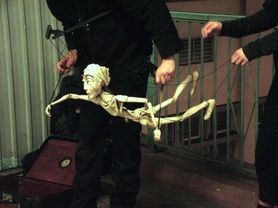
Marionnette, cc SoHome Jacaranda Lilau

“What happens to me is because of me!”

I need to recall it more often.

This is how free people think, without however bragging carelessly, nor taking on themselves all the guilt of the World.
For they are not madmen, deluded that anything goes, only awakened minds who understand that some things are given but some you make.

To be a person, not a toy of fate, you observe and respect that which is given, but you are the one who made the choices, right or poor; for this reason, sooner or later, what you live is your own doing.

Paraphrasing what someone, maybe Joseph de Maistre, said about nations, it is true about individuals too, that those who are unable to fight for their freedom, or to withdraw in the inner exile of their reflective life, or to flee, or perish, deserve their situation.

Psychology has a name for this in its jargon - it is called locus of control [1], the place from which you feel that you are controlled; from inside you or from somewhere else, outside.

Those who expect everything that happens to them to be determined from an external place out of their reach - commanded by the forces of economy, God, history, chance, rulers and hidden power-groups or even by the inexorable progress of objective natural processes - those people live like objects, doomed to be some kind of puppets, helpless and submissive.

Those who on the contrary hold the they are the main cause of what happens to them - by what they, decide, do and avoid - are able of substantial control. In mind, and possibly in deed, they are free. They may fail but even then, they lived free. As a classic Romanian poem claims:

"We owe a death, we all, death reigns
but it is not at all the same
to die a roaring lion
or a dog in chains" [2]

In the infinite ocean of lawful causalities there is always some room to be an agent, author of  events, to start something [3], while you navigate your little boat. The complication and the myriad of forces at work is such immensity, the potential scenarios so many, that the choices you make are acts of free will.

What you cannot master and you do not want, you can often avoid and work your way around. You can wait and persist like water always ready to flow its way and your choice will come to pass. But keep away from the places where “everything not forbidden is compulsory” [4]; or run away from there as soon as you can. Do the same when you see that the wheels of history start to turn [5] around you.

_______________________________________

[1] Locus of control: Rotter, J. (1966). Generalized expectancies for internal versus external control of reinforcements. Psychological Monographs, 80, Whole No. 609

[2] George Coşbuc, Decebal catre popor: C-o moarte tot suntem datori!/…/Dar nu-i totuna leu să mori/Ori câine-nlănţuit.
 
 [3] Hannah Arendt, The Human Condition, Univ. of Chicago Press, Chicago, 1998

[4] T.H.White, The Once and Future King

[5] Martin Luther: "Blood alone moves the wheels of history" (but I never found the historic source where Luther wrote this.


Picture
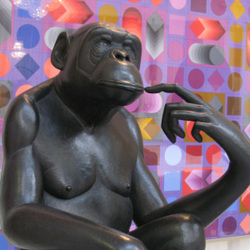
At the time you must chose one, which
is prevailing?

Truth or compassion?

Friendship or Justice?

Freedom or Equality?

Solidarity or Prudence?

It is easy to choose between good and bad; the difficulty is to choose between bad and bad or good and good.

The trouble with values is that they are all good. All good values are not created equal.

Most people will swiftly agree with most of the high values of humankind: freedom, happiness, truth, respect, justice, equality, prudence, compassion, courage, modesty, patience, moderation, harmony, industry and so on; but ask them which is the most important and prevailing. You will suddenly find in the pattern the striking differences that tell fascists apart from communists and religious fanatics from tolerant free thinkers; or, why not, tolerant believers and fanatic free thinkers [1] .

Bad people have no problem with good values. Irreconcilable opposites are made from the same handful of values representing goodness. It is the weight of each that differs. Probably, the difference between sages and fools is also a matter of ordering values.

To become aware of your own values and  size up your order of priority is well worth careful reflection. The precedence of values passes so unquestioned that common sense does not even see it and certainly does not examine it. This layout defines nevertheless, shielded from critical sense, who you are, what you respect and what you seek in life. Your value-formula determines what good life is for you and what kind of wisdom fits you.

Your values drive you; if you are not aware of them they drive you from the dark.  Bring them to light and examine them. You do have a right to weigh them freely - in your head - to chose your own choices.

We tend to forget that values are man-made axioms agreed as beneficial. There is nothing God-given about them. Keep Nietzsche's hammer at hand [2] to gently tap on each value and to judge the sound. Depending on the place where they are hung, some of those bells may give an empty ding of hypocrisy.  This is not theory: your chime, your arrangement of personal values chants who you are.
___________________________________________________
[1]See the work of Milton Rokeach ex: "The Nature of Human Values" 1973
[2]Friederich Nietzsche, "Twiligt of the Idols" and "Beyond Good and Evil"
 
 
Picture
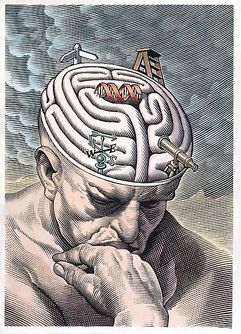
You can measure the depth of your understanding – and to say it bluntly, your intelligence – by the number of points of view you apply when you consider something or someone[1].

The multiplication of your points of view is  a powerful lever of freedom.

Using just one dimension makes man as discerning as an ass. “People who only see one side of things engage in quarrels and disputes” exclaims the Buddha[2].
The unexamined habit is to adopt a point of view and hold firm to it. To become aware of why we came to our slant and to examine multiple points of view – ours and others’ - frees us from such a narrow, unique angle; the more standpoints we conceive, the more we grow able to understand and to dialogue; our action choices increase too. 

                                                                    *
The good news is that adopting more than one point of view is something we can learn. We can become aware of our point of view, observe other people's position and understand multiple views of that which firs appeared one-way.

How then  do you discover what is your point of view? 

By asking yourself.  Care to reflect for a moment. Ask someone you trust to describe to you what your point of view seems to be, compared with other possible ones.

And other people’s points of view? 

Nothing special is needed, just observe, listen and give at least a thought to what other positions are possible.

Stop practicing that truth is one, that right opinion is one and they are all yours.
______________________________________________________
[1]See research on this subject called “semantic differential”.  The good news is that you can educate yourself to consider more points of view and so, grow more intelligent.
[2]"Tittha Sutta: Various Sectarians (1)" (Ud 6.4), translated from the Pali by John D. Ireland. Access to Insight, June 14, 2010, http://www.accesstoinsight.org/tipitaka/kn/ud/ud.6.04.irel.html.
 
 
Picture
They could have been branches...
Your freedom can be measured by the amount and latitude of meaningful choices which you can make in your mind and apply in your deeds [1] 
without being destroyed.

Multiply choices to have more freedom.
 
*
You are free first in your mind, by your abundance in thinking and feeling and willing. You are free when you understand yourself so that you know why you want and you judge that your desires are worth, not weakness, not blind slavery to instincts and drives.


Second, you are free by the range of what you can express and communicate sincerely to other people.

Further, you are free when you have choices of important things you can do or not do.  You are free when you not only know about your choices but also do chose and follow what you started, so that what happens to you is mostly because of you. This freedom increases with your effort and power of will, as you grow able to vanquish the difficulties, constraints and obstacles met on your way.

One can judge that you are free in what you do when you feel responsible for what you do. 

You are finally free only when you look back at what you did and achieved - successful or not - and you feel satisfied that you realized yourself by that which you have chosen instead of discovering that you deceived yourself, influenced by weakness and error.
                                                                 *

If you want to set people free awaken them to choices; unaware, uninformed,  uneducated to perceive their choices, they are mere slaves, even in free countries.

But do people really want to be free?

Freedom requires  people to understand and think out complicated things with their own mind; but most people desire things to be made simple for them.

Freedom makes one responsible. Most people hate to be responsible.
 
Freedom is taking the risk to do something else and to be surprised my newness. Most people dread risk.

Freedom needs one to take initiative, but people are unimaginative and lazy.

Who wants to be free? As Etienne de la Boétie wrote, we all as crowds, suffer a fascination of voluntary servitude[2].
The fact is, as it seems, that most people ignore choices or make choices presented by others: authorities, leaders, specialists. 

Speaking for myself, I do want to be free, to defend my freedom and to increase it; there are many other people who want the same, as I observed and read. My lines are for us, freedom lovers ready to pay some price for it. 

                                                                 *
For you, to be free, remember this: quite often, there is a choice of the choices themselves. Do not let people tell you: "The choice is this." but rather "Look these are some choices, and there are many more." Do not trust others to decide what choices there are, do not let other people choose the choices for you.
____________________________________________________________
[1] This common-sense measure of choices shows individual freedom, meagre or rich at a given moment. I prefer it to accepting the precise but passive explanation of freedom as « the understanding of necessity » or freedom as “free will” or some mad dream, free from causality and free to do whatever. And definitely, freedom lived by the individual need not worry too much about freedom defined by philosophers and politicians.
[2] Etienne de la Boétie, Discours de la Servitude Volontaire, 1574

Picture by Tawng - Royalty free vector graphic


wisdom, criticism, losing, point of view, intuitive thinking, values, listening, silence, strategy, a time for everything, n±1, knowing people, surprise