Wisdom, sleeping..
  • Home
  • Four Pillars of Wisdom
    • Why Wisdom, a Provisional Foreword
    • Doubts
    • Ethos or How I Learned Some Wisdom
    • The "State of the Art" - an impression
    • A Nutshell History of Worldly Wisdom
    • What is Wisdom?
    • The first pillar of wisdom: wise knowledge
    • Good Judgment is the second pillar of wisdom
    • Wise Conduct is the third pillar of wisdom
  • Articles
    • Secret Life of the Obvious
    • Powerful inaction, conspicuous absence, bountiful void
    • The Power to Make Things Simple
    • Three kinds of Criticism
    • Critical thinking is disobedient, not correct
    • Strategy of Surprise
    • The Rectification of Meaning
    • The n plus minus one principle: higher, wider, different...
    • The Fascination of Paradox
    • A choice of choices
    • Des choix de la spiritualité
  • Blog
  • This reminds me of a story

About giving and taking

12/7/2020

1 Comment

 
Picture


You can pronounce all the right words and still not be understood. Use the talk fit to the folk you address. As the sage said, you cannot bring the people to the words, you must bring the words to the people.


This reminds me of a story:


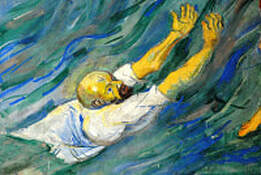
Kassim the taxman, the one squeezing the people each autumn for their last dime, fell into the fountain and was about to drawn.

A flock of villagers stretched out helpful hands and shouted interrupting each other:

“Your hand!”
“Come, reach out! Let me have your hand”
“Give me your hand! Quick!”

All this, to no avail. The taxman kept thrashing around, choking and splashing, more and more exhausted.

Now Nasreddin held out his arm and shouted:

“Take my hand, Kassim!”

The man instantly grabbed the hand and was pulled out of the water. To the amazed audience, the Hodja explained the obvious fact:

“Did you ever see a taxman giving? They only know taking.”
1 Comment

A Turkish bath...

12/7/2020

1 Comment

 
Picture


You are worth to people as much as they hope from you, teaches Gracian the philosopher. Not as much as they owe you. Only fools count on gratitude. If you want something, offer expectation in exchange.

​
This reminds me of a story:


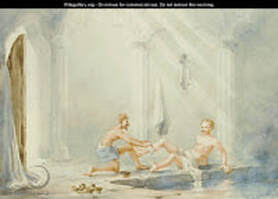
The sweaty Mullah tired by the big city felt it was time to take a good bath.

The chambers and washrooms of the old Court hammam in Konya were swarming with merry people glad to escape the sandy heat of the simoom, the poisonous wind of the summer.

As his garment was poor and his face shy, Nasreddin was given a soiled towel, stinky slippers, a tiny piece of scorched soap and, of course, no attention. Well, at least they let him in.

On his way out, he did not forget to leave an amazingly rich tip - a small gold coin.

The following week, when he went to the bath, our Hoca was pampered like a pasha: large soft towels, sandal-wood clogs, silk peshtemal, precious scented soap at the soaking pools, refreshing drinks, total massage - at the limit between heavenly pleasure and true pain - with abundant perfumed foam and even other attentions, all ended with finest soothing oils, in the relaxing half-light of the rest room.

On his way out, he threw a small copper coin to the tellaks bowing low to salute him.

You should have seen their long faces:

"Why master? Didn't you like the service? Last time you gave us gold."

"Ah, I liked it very much; but the gold was for this time, my good man. The copper is for the last time."

1 Comment

Walking on water

12/7/2020

0 Comments

 
Picture


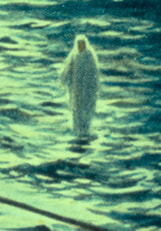
“Occam’s razor” principle teaches us to shave away the useless complications when you do not need them. Keep it as simple as possible (but not simpler – would say Einstein).


This reminds me of a story:


Tired of so many years of travel and danger, Nasreddin was wandering back home. On his way he met a Sufi saint. They walked together for many days, in silence, heading for Konya.

At the muddy banks of the Kizilirmak not far from Karalar, the large expanse of the waters halted their progress. For a while, they looked quietly at the peaceful settlement on the other side of the river.

Unexpectedly, the saint spoke: "I can walk on water. It took fifty years of meditation, and now I am light enough. But I can’t take you with me."

The Hodja raised his eyebrows:
"Fifty years? That's a long time…"

Followed another long moment of peaceful silence. Then Nasreddin added:

"Concerning me… why not stroll over to that man with the boat and pay two coppers for the passage, both of us?"

0 Comments

Stone soup

12/7/2020

0 Comments

 
Picture
The best way to teach and to convince is to act like Socrates. Be a midwife not a schoolmaster. Come wisely with seemingly empty hands, and modest wisdom. Cook new knowledge - not from your provisions but from the ingredients they have (and do not know how to value). Nothing convinces one like that which he did by himself.

When the skilled adviser did his work, people believe they are the ones who made it. 

This reminds me of a story:

The wind and the looting hordes had blown away even the little hospitality a pilgrim might have expected. The farmers shut themselves behind their walls, with relatives, servants, cows, sheep and poultry, all hoping to forget the world outside. Nobody would offer this poor traveller the charity of some food and a sheltered corner for a night.

After a good dozen of frozen doors slammed into his nose, Nasr Eddin tried a different way...

He knocked on the tall wooden gate of a rich household on the hillside.

"Allah help you!" said a servant, "we have nothing to give today."
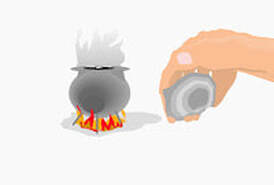
"A master cook of the kings doesn't need much," Nasrudin replied, "Only a cauldron of water to prepare my stone-soup."
"Stone-soup!"

At that time the evenings were long and people eager to be amused with curiosities. They let him in.
"Pray let me have a cauldron of fresh water on the fire," said the Mullah.
They gave him the water.
The Mullah took out of his bag a carefully wrapped river stone.
He washed the stone thoroughly and put it in the water to boil.
The whole household gathered to see this.

After a while the Hodja borrowed a large spoon and tasted the broth:
"Umm! Very good! It needs just one pinch of salt while it simmers."
They passed him the salt.

Soon, the Mullah tried the soup and said:
"Good indeed!"
All this looked amazing and people grew very interested.
Nasr Eddin tried another sip and repeated:
"Good indeed! What we should add now is some herbs and vegetables to round everything up with a most savoury result."

At this time everyone was so curious. They brought him spice and vegetables of the season.

When the vegetables were also well boiled the Mullah licked the broth from the spoon and exclaimed:
"This is one delicious stone soup, of the kind you eat once in a lifetime! It is really worth adding to it some meat. Do you happen to have a fat bone at hand?"

The hosts were quite excited with this stone-soup and someone brought a big meaty marrow bone.

The Mullah placed the bone by the stone and everybody waited. In due course the soup was ready.

The Mullah served the soup to his merry hosts an did not forget to help himself with a large dish and, of course, with the bone. Everybody was pleased to have such a delicious meal prepared from so little.

0 Comments

Imam Bayildy

12/7/2020

1 Comment

 
Picture
​


​Tyrants deserve hypocrisy. Render therefore unto Caesar the things which be Caesar's, and unto God the things which be God's. And what is yours, keep for yourself.

This reminds me of a story:


Nasrudin presented to Tamerlane a dish of eggplant. It was the authentic Imam Bayıldı, the delicate dish that had an Imam faint with pleasure, prepared - as they do it at Konya - in honour of the Great Emir and in sign of the profound love and respect of the Turkish people for the generous conqueror and destroyer of their country.

The cooks were lucky. Timur, who happened to be hungry, liked this course very much. He ate a second serving and said to the Hodja:

“Worm, this is delicious. How come I did not know it before?”
“Indeed, Master, said Nasrudin, it is the best thing we can eat in this world, a gift from Allah the All Beneficent. You did not savour it before because aubergines, the Indian “brinjal” were never cooked properly until we prepared them with Turkish skill and spice.”
“Let this be served as a standing dish for all my meals” decreed Timur impetuously.

This order was strictly followed for a couple of weeks, after which the Master of the Lucky Constellations felt that he could not take another bite of it, nor see it nor – worse – smell it.

“Enough!” roared he. “Never serve this again!”
“ I have heard an do obey Master, hastened Hodja. Indeed, for a monarch of your taste aubergines is an unworthy nutriment. Rather leave it to our enemies and to the poor.”

The Ruler turned a suspicious look towards Nasrudin:

“Aren’t you speaking one and other thing like a serpent with a forked tongue? A fortnight ago, did you not praise eggplants as the supreme food?”

“That is true. But I am serving the Emir, not the aubergines.”

1 Comment

Half your life and all your life

12/7/2020

0 Comments

 
Picture


Modest places require vital skills. If you are well educated, beware of the simple people. They may give you a lesson.

​This reminds me of a story:


Now Nasreddin was a ferryman. One day he took a scholar in his boat. As he listened to the Hodja's chatter the learned man - a scholar equal to Rumi himself - observed some errors of speech and asked:

"Tell me Hoca, did you ever study grammar?"
"No."
"What a shame! You wasted half of your life."

Nasreddin grew silent.

After a while he asked:

"Wise one, did you learn to swim?"
"No", said the professor.
"What a pity! You wasted your entire life, Master. We sink. "

0 Comments

Get the goat out of the house

12/7/2020

0 Comments

 
Picture


Bad is never good until worse arrives. This maxim – reversed - is useful in unpromising situations. You could make things even tougher and then, get back to what was before.


​This reminds me of a story:


Nasreddin the Mullah was dispensing much respected wisdom to the gent of Aksehir. The needy and the perplexed found light in his simple, deep words and the rich preferred to listen to his sermon rather than feel the bite of his sharp tongue.

A man came to complain about his terrible poverty:

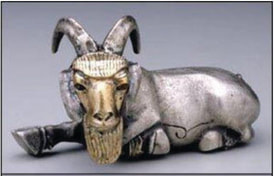
“It is unbearable” he said, “I live with my wife, five kids, grand mother and grandpa in the one and only noisy room of a small hut and we must feed, all of us, mainly on the milk of my unique scabby goat. I am desperate, something must be done! What to do Mullah?”

Nasreddin listened with his usual compassion, pondered for a while and then said:

“This is a serious situation; we shall do one thing at a time. Go home and take the goat into the house. Feed it carefully and keep it there day and night. Come back to me in one week from now.”

The man did as he was told. He returned after one week of misery:

“Mullah, this is the bottom! The goat munched my slippers and soiled everything. It sleeps in grandfather’s lap with its hooves on my wife’s pillow. We all got bruised. The stink keeps us awake at night and we can’t even talk to each other, such is the racket. This must end before we run away, all of us.”

“I see,” said Nasreddin. “This will stop right now! Take the goat out of the house and come to me again in one week to advise what happened.”

Another week passed and the poor man came again.

“How is it now?” asked the Hodja.

“I must say that after taking the goat out of the house we felt much better”.

“Excellent!” congratulated Nasreddin. “Go on like this. You can see things are improving.”

0 Comments

What will I say?

12/7/2020

0 Comments

 
Picture


Effortlessly, with less boring, you can help other people to learn and accept knowledge.

To achieve this, invite them to put their minds together and teach each other what they know, while you keep silent. What they know already will come up like oil on the water. Then, if you still have something left to say, add your grain, without fear of repeating the obsolete.


This reminds me of a story:


Nasreddin was now a reputed philosopher.

The day came when he decided to walk back and bring a tear of remembrance to native Horto, the village of his first childhood slap.

The news was fast to spread over the fences. The elder of Horto, flattered by the visit of the great man hurried to bid him:

"Pray, master, do come and share your wisdom with the people!"
"Be it" he answered.

At the heart of the market, duly mounted on a huge festive barrel Hoca addressed the crowd:

"People of Horto" he started, "do you know what I will say to you?"
"Yes we do", shouted some impertinent youngsters.
"You do!" Hoca grew red in the face and left shouting: "As you cannot add a drop into a full cup, I have nothing to say to people who know. Arrogant fools!"

After this unhappy event, the notables came again to the Hodja and insisted with their humblest apologies:

"Have patience Maulana, have patience with the simple in spirit! Come again to serve the victory of Religion and impart your wisdom to the people!"

Nasreddin, generous, accepted.

It happens that the next day, a pleasant afternoon perfumed by a gentle breeze, when Hoca mounted to his improvised pulpit, he asked again:

"People of Horto, do you know what I will tell you?"
Better prepared, some voices rose:

"No, we don't know a thing."
This appeared to be just too much for the teacher:

"Ignorants! Nothing can be built on nothing! You are hopeless!" And he left.

That evening the delegation came again to intercede with the angry Mullah:

"Wise one" they said "have mercy, don't live your people in the darkness! Please, please try a last time, come to the mosque and let us see the light!"
And he accepted.

Next day, when Hoca rose to the minbar, a silence fell upon the crowd. And he asked:

"People of Horto! Do you know what I will tell you?"

Now the villagers were puzzled on how to deal with this difficult master. Shyly, some voices advanced:

"Well, some of us do but some of us don't."
"Aha!" exulted the Mullah. "Then, let those of you who know, tell those who don't!" And he left.

0 Comments

Mourning that comes from the heart

12/7/2020

0 Comments

 
Picture


​Success has many parents but failure is always an orphan. Similarly, insolvency has no descendants, but wealth finds many inheritors.


This reminds me of a story:


The richest man in Aksehir, owner of several houses, shops, vineyards, and fields, died. At the funeral, among the numerous family members present, arrived in haste from the four corners of Anatolia, you could see Nasreddin, eyes in tears, moaning and exalting the good deeds of the deceased, with all the signs of deep regret and pain.

Noticing this, a relative of the departed came to appease him and ask him:

“Why do you suffer? You never met him and you aren’t even a distant relative of the deceased.”
“This is precisely what I regret so much.”

0 Comments

Turning your other cheek, with an eye for an eye

12/7/2020

0 Comments

 
Picture


Rebuke is a gift. Be careful when you admonish. Friends may take offence for a warning but you owe it to them. Honest people deserve critique, to improve. Enemies only use such free lessons to adjust their shots and train their wrongdoing.

A wise man must be a fool indeed to teach lessons to enemies. Don’t fix the wrong thing.


This reminds me of a story:


For quite a while now, at the tea house, as he sat at his favourite table sipping the sweet brew of the afternoon, a cheeky brat would pass and knock down Nasreddin's turban.

This happened again and again but Nasreddin, as angry as he must have been, didn't say a thing. His face got red but he remained silent. The baker even asked him:

"Hoca, how can you allow this impertinence? Why don't you stand up and teach him a lesson?"

"Teach him?" said Nasreddin. "My scolding could make him more cautious so that later he may do more harm. As I dislike him, quite a lot, I will rather let his impertinence grow every day. I will take the advice of the prophet Issa and turn to him the other cheek. If I keep sipping my own tea Allah will teach him."

And so, the shameless jest went on.

One day, a cold-eyed janissary from the troops of the Padishah was sitting at the mullah's usual place. The wicked lad, by force of habit, ran by and knocked down his turban. The soldier swung up with his sword and before thinking cut the boy's head off.​

0 Comments
<<Previous
Forward>>

    111 teaching stories of Nasreddin Hodja,the wise fool of the East

    Retold by Ioan Tenner

    Archives

    July 2020

    Categories

    All

    RSS Feed

© 2011 - 2020 Ioan Tenner & Daniel Tenner