Essay
Can wisdom be put in writing?
First published: 6 September 2026
This text stood as part of the introduction on the home page until September 2026. It is a text in its own right, and it is given its own page here.
Can be Wisdom put in writing ? Perhaps, some of the greatest traditional sages, like Confucius, Zarathustra, the Buddha, the Prophets of the Bible, Socrates, the Christ, or even Homer and Aesop never wrote, because they knew the danger of wise thoughts sleeping frozen on tablets: "...if you ask them a question, they preserve a solemn silence." (Plato, Phaedrus 275d, tr. Benjamin Jowett).
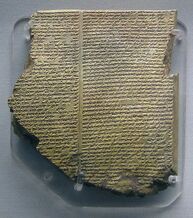
The trouble with the traditional treasury of wisdom - cast in metaphors, maxims and fables simple enough to be understood by many - is that it sleeps suspended in time, half-alive half dead. It is like the grains in the Parable of the Sower; most are wasted on bad soil, only some fall on good fertile earth. The meaning of wise words is hardly separable from the one who gives them and from the one who receives them. To be useful anew, elsewhere and someday, wisdom needs to be resurrected from its slumber in changed times and circumstances. To rise and serve you, the seeker of wisdom, to become your own, those notable words - accounts, ideas, precepts and symbols - must turn from other people’s interpretations into your own understanding. Understanding is a living state of one individual mind, similar to the surprise of discovery, which only you can experience by yourself. Like all ideas, wise truth must turn from general thoughts into present commonsense and obviousness, practicable. It must augment your point of view and fit your situation. It must, as I like to say, project light in front of you - to illuminate your way - and not into your eyes - to dazzle you and lead you in awe but half blinded, ready to be led.
Wisdom may grow out of date. Even the common places of good sense, so universal and accessible, wear out and change their references with the centuries. Wisdom being situated and tailor-made in its nature, its meanings may become alien to some dissimilar world where they come back to life. They may wake up alone, without their previous fellowship of understanding and shared values. A little high wisdom stirred in such isolation and applied "in general" can even be a dangerous thing, with legs too short to reach the ground.
By its nature, genuine wisdom does not instruct, it does not train, it hints, points, asks questions and shapes experience with a soft touch; heeding it helps only when fine-tuned with esprit de finesse and applied with prudent good sense. Moreover, wisdom received helps only when used wisely. It usually inspires you to see things in a new light, warns you what and what not, what is good, right, beautiful, useful, what is preferable or on the contrary damaging and evil. Maybe it illuminates why, for what purpose, but it doesn't tell you in what measure, how exactly, when, and where, and with whom.
In my personal many decades old record called Wisdom sleeping which is built like a maze of thoughts, I only point at promising ways and fresh starts but I cannot tell one in writing if and when to join that path and where to stop. Judging right, intelligent conduct in an ever-moving context, solving new problems, is a matter of having your own head well made, an open mind, good masters and many flying hours of learning from your own life experience; sagacity is, before everything else, a mindset to seamlessly recognise and repair errors as you do them. There is no answer right from the beginning to the end. Yet again, alas, the rich – the ones intelligent, resourceful and educated, the continuously learning and unlearning ones - will become richer and the poor in spirit will stay as dumb and dupe as they were found.
Accordingly, you are not expected to believe what you read here but rather examine with critical sense. If it tells you something, check and try it out carefully.