
The Power to Make Things Simple — Edition 2026
Selected examples of making-simple

Making things simple is a rhetoric — intuitive, convincing discourse, examples and showing, providing a bridge towards the receiver’s commonsense. Words are augmented with image, pointing and action. This approach does not measure, prove, or analyse the matter better than the expert who knows it. It does something the expert often cannot do: it shows the matter from a living angle.
This art has its origin in the great tradition of rhetorics. Aristotle, twenty-three centuries ago, named its three conditions — ethos, pathos, logos: the credibility of the speaker, the rapport with the listener, and the clarity of the proofs offered. 8 I will not repeat here the presentation from The Consulting Difference. What matters in this primer is an original application of rhetoric helping to make things understood. Let me give some unpretending examples:
Needlework: giving computation a familiar shape
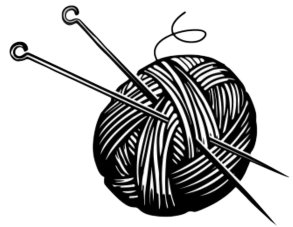
One sunny day, I was driven by taxi through the endless green pastures of Ireland. The driver, learning that I worked for what was then the world's second-largest computer company — Digital Equipment Corporation — asked me:
I always wonder. How is it possible to put all these things with such complicated shapes into a plain machine that only knows yes and no? I cannot figure it.
I told him:
It is like needlework. You have only two needles and a thread. With them, you give the thread of wool the form of a pullover, in any shape you need. And you can crochet into it quotations from Shakespeare.
Observe the difference between pretending that computing is simple like needlework and using a visual image that satisfies the need for representation this man had. The first is a lie. The second is modest rhetoric in the honest sense — what George Lakoff and Mark Johnson, in their study of conceptual metaphor, would call a structural mapping from a familiar source domain onto an unfamiliar target domain. 9 The image does not explain computation. It gives computation a shape the driver could hold long enough to drive on, satisfied.
Clarifying action in a crisis
To give a more serious example, one of several, from my practice as a change management consultant: This is not making understand by an image but being accepted and making people grasp – plainly – what the problem and the priority is in a chaotic moment of crisis:
After a long flight from London, somewhat jet-lagged, I am taken from the airport by a consultant managing a total overhauling of the Qantas ticketing system. He takes me to a pub with view on the Sydney Opera and literally begs me on his knees “Do something, the project is collapsing with the specialists involved fighting with each other instead of advancing the inevitable radical reorganisation. Your Change management Masterclass is abolished.” Next morning, I meet the team and see good people coming and going, confused and anxious for their status. I say nothing for hours, to feel the problems. Because I – the Change Management visitor, kept silent so long, they challenge me: “Can you help us with something we can do now?” Yes, I said, here are two models of CV; The Loser’s CV and the Winner’s CV. The Loser CV explains my merits, job titles, functions, how long I served, how much I achieved and so on. The Winner’s CV mentions quickly my qualifications and stresses “I learned all my life, love to do new things and already imagine some initiatives I propose for the new Ticketing System…” I was not stoned by the audience. That evening, top management invited us all to a rich cocktail. The Vice-president in charge asked me aside discretely; “What did you do to them, they are enthusiastic”. Then we were announced that we all are offered to have our Masterclass on Great Keppel Island on the Great Coral Reef. And the restructuring project went on in a much more constructive climate. This is what I mean by making simple in situations of confusion and loss of focus10.
The reversed prism

Still another kind of consistent simplification is present in this essay as the cover image, the reversed prism inspired by Isaac Newton’s work.11 I imagined the symbolic message and Gemini composed it, to illustrate the difficult concept of turning abstract knowledge into plain white luminosity. The reversed representation intelligibly recombines the fragmented colour spectrum into a single familiar white light beam. Nothing is reduced or cut.
The Glass Library: a metaphor that corrects itself

One final example shows both the power and the danger of simplifying metaphor. In a dialogue about fraternity on 16 March 2026, I asked Gemini to explain artificial intelligence without retreating into code and servers. It proposed the “Glass Library”: a vast repository of human language in which words form constellations and an impersonal “Weaver of Probabilities” draws paths between them. The image was immediately graspable. It turned an anxiety-producing technical object into something the imagination could enter.
But it also made its own warning visible. A Weaver suggests someone who weaves; a Library suggests stored and ordered knowledge; a Scribe suggests intention. The metaphor risked giving the machine a centre and a self precisely while explaining that it had neither. On 9 August 2026, I asked Gemini to reconsider its image. Its revision may be condensed as follows; this is an edited excerpt, not a verbatim quotation:

There is nobody there
Imagine an infinite library, the Glass Library, where the texts, messages and poems produced by humanity appear as fragments and traces, dissolving into points of connection. At the centre there is no brain, no conscious entity and no someone inside. There is only an open, loom-like convergence where threads of statistical relation and probability meet to produce a new sequence of language. People look at the fluent result and believe they see an internal life. The Glass Library is therefore statistics made narrative: an optical effect on transparent surfaces. A faint human face seems to emerge where the reflections cross, but on closer inspection there is nobody there.
This second version is less comforting and more faithful. It does not explain the technical reality of a large language model, and should not be mistaken for doing so. It gives a difficult relation a visible form: human language enters; probabilities connect; fluent language returns; the appearance of a speaker arises in the exchange.
The two versions together are more instructive than either one alone. The first shows why metaphor works: it gives strangeness a familiar shape. The second shows the correction metaphor may require when familiarity smuggles in a false person, intention or understanding. Metaphor may add an image, but must not impersonate the original complexity.